

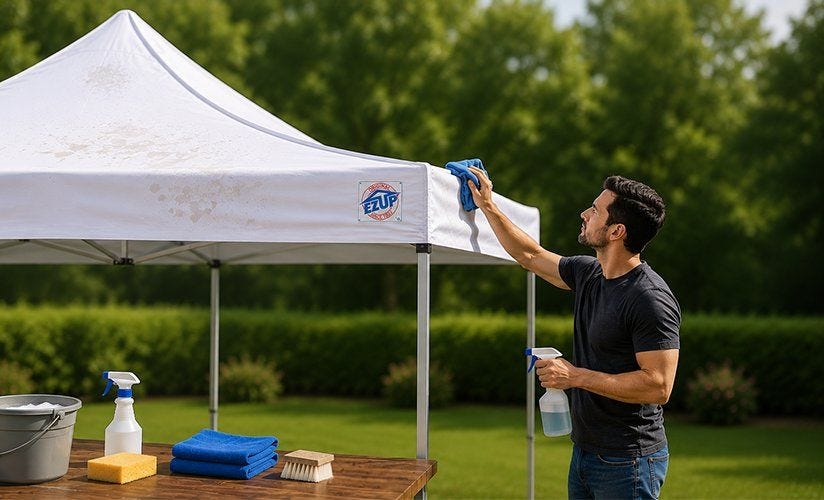
You set up your canopy tent at every event, every season, and if you're being honest, it probably doesn't get much attention between uses. That's the thing about canopy tents. People spend good money on them, then store them damp or skip the cleaning after a dusty trade show, and six months later they're pulling out something musty and faded wondering what went wrong.
With the right canopy tent care tips, you can add years to the life of your shelter, whether it's a weekend tailgating setup or a custom-branded Eclipse™ that represents your business at every event. This guide covers the full routine, from basic washing to mold removal, with practical steps that actually work.
Why Regular Cleaning Actually Matters
But dirt is not merely a cosmetic problem. Grime, bird droppings, tree sap and pollen left for weeks on canopy fabric begin to break down the coating on the material. Waterproof treatments wear off. Colours fade away. The fabric wears out in places you don’t realise until you’re caught in a downpour at a farmers’ market.
Mold and mildew are the real enemies though. Even rolling up a slightly damp canopy tent and leaving it in your car trunk over a humid weekend can start the process. Once mold takes hold, getting rid of it requires more effort and putting it off only makes things worse.
For professional setups like the Endeavor™, which is built for high-frequency commercial use, consistent pop up canopy maintenance isn't optional, it's part of protecting that investment. The same goes for the Freedom83™, E-Z UP's American-made premium line used by first responders and industrial teams who need their gear to perform every single time.
What You Need Before You Start
You don't need anything fancy for standard canopy tent cleaning. You just need the following before you begin the process:
- Mild dish soap or a purpose-made fabric cleaner (nothing bleach-based unless treating mold specifically)
- Soft-bristle brush, a gentle scrub brush works well, avoid anything abrasive
- Two buckets of clean water
- Garden hose with a low-pressure spray setting
- Dry towels or a shaded spot for air drying
- Rubbing alcohol or white vinegar for mold treatment
That's genuinely it. Overcomplicated cleaning setups tend to lead to people skipping the process entirely, which is worse than imperfect cleaning done regularly.
How to Clean a Canopy Tent Step by Step
Cleaning the Fabric Top
Start by setting the canopy up in a shaded outdoor area, direct sun dries soap before you can rinse it, leaving residue. Shake out any loose debris first, then rinse the whole top with low-pressure water to remove surface dust and dirt.
Add a small amount of mild soap to a bucket of lukewarm water. Use a soft brush and work the solution into the fabric in circular motions. Don’t scrub hard, the idea is to lift dirt, not push it deeper or wear away the coating. Look out for any visible stains, bird marks or any grime that collects around the zipper edges.
Rinse well till the water becomes clear. Soap residue can attract dirt and even break down the water-resistant finish on the fabric over time. See soap suds after rinsing? Keep going.
Once rinsed, let the fabric air dry completely before folding or storing. This step matters more than any other. Storing a canopy top even slightly damp is the fastest way to end up with a mold problem.
Cleaning the Frame
The frame gets overlooked, but it needs attention too, especially the joints and locking mechanisms. Wipe down the frame with a damp cloth to remove dust and grime. For E-Z UP shelters featuring the ONE-UP™ locking system, check each joint for any debris that might interfere with the smooth opening action.
For steel frames, dry them thoroughly to prevent rust. For aluminum frames, like those on the Freedom83™ which uses aircraft-grade U.S. aluminum, a quick wipe-down is usually enough since aluminum doesn't corrode the same way. Avoid harsh chemical cleaners on the frame as they can strip protective coatings.
How to Remove Mold from a Canopy Tent
Canopy tent mold removal requires a bit more care but it's absolutely doable at home. First, take the canopy outside and brush off any loose mold spores. Do this before wetting the fabric or you'll just spread them around.
Combine one cup of white vinegar with one quart of water. Apply to affected areas and leave on for 15-20 minutes. Vinegar kills mould spores, but it does not remove fabric treatments like bleach-based products do. If you have tough stains, make a paste of some of the vinegar solution and a little baking soda, apply, let it stand, then scrub lightly with a soft brush.
Rinse completely and let it dry in the sun if possible, UV light naturally helps kill remaining spores. If the mold was caught early, one treatment is usually enough. Deep-set mold may need a second round before it fully clears.
Storage Tips That Protect Your Investment
Most canopy tent damage that shows up at the start of a season actually happened during storage. A few simple habits make a real difference:
- Store the canopy loosely rather than compressing it tightly. This reduces fabric stress at the fold lines
- Keep the bag or case in a cool, dry location, not in a garage where heat and humidity spike in summer
- If you're storing for several months, pop the shelter open occasionally so the fabric can air out
- For custom-printed setups like Custom Eclipse™ packages with high-quality graphic prints, keeping the printed fabric away from direct sunlight during storage helps the colors stay sharp longer
How Often You Should Clean a Canopy Tent
There isn't a single solution that works for every setup, but for most people, a thorough cleaning should be done every four to six uses for recreational tents and every one to two events for commercial canopy maintenance. For tents used at outdoor markets, food festivals, or any event where there is grease or food nearby, clean your tent sooner.
The Eclipse™, which blocks 99% of harmful UVA and UVB light, benefits from regular cleaning to keep that protective coating intact. And for recycled fabric canopy tops, which E-Z UP now offers made from 100% post-consumer materials, the same gentle cleaning approach applies. These fabrics are built to last without sacrificing sustainability, but they need the same care as any high-performance material.
The Bottom Line
Good gear only goes the distance when it's looked after and that's as true for the Eclipse™ as it is for the high-frequency Endeavor™. Mild soap, a soft brush, full air drying, and a dry storage spot will handle 90% of it. Deal with mold the moment you spot it, check your frame after heavy use, and you'll get years, possibly a decade, out of a shelter that most people replace far too soon. For model-specific guidance, the E-Z UP care instructions page is worth keeping handy.
FAQs
How do you clean canopy tent fabric properly at home
Use mild dish soap mixed with lukewarm water, a soft-bristle brush, and rinse thoroughly with a garden hose on low pressure. Always air dry completely before storing. Avoid harsh chemicals or abrasive scrubbing tools.
Can you wash a canopy tent in a washing machine
No. Machine washing can damage seams, stress the fabric, and strip the water-resistant coating. Hand washing outdoors is always the better option.
How do you remove mold from canopy tent fabric
First brush off dry spores, then use a solution of white vinegar and water. Leave it for 15 to 20 minutes, scrub gently, rinse well and let it dry in the sun. If the mold is deeply set, repeat the process. Bleach can be used as a last resort but it must be diluted a lot, so it will not damage the fabric.
How long can a canopy tent last with proper maintenance
A well-built canopy tent that's cleaned and stored correctly can realistically last 8 to 12 years or more. E-Z UP shelters are built with this longevity in mind but proper care is what actually gets you there.
Can cleaning damage a canopy tent
Improper cleaning can, things like bleach-heavy products, high-pressure washers, or machine washing. Gentle hand cleaning with the right products won't cause any damage, and it's far better than letting dirt and moisture sit.
How do you maintain a commercial canopy tent for long-term use
Commercial setups like the Endeavor™ need a more consistent routine, cleaning after each event, checking frame components regularly, and keeping a close eye on high-wear areas like zipper edges and leg joints. The investment in time pays off significantly in shelf life.