

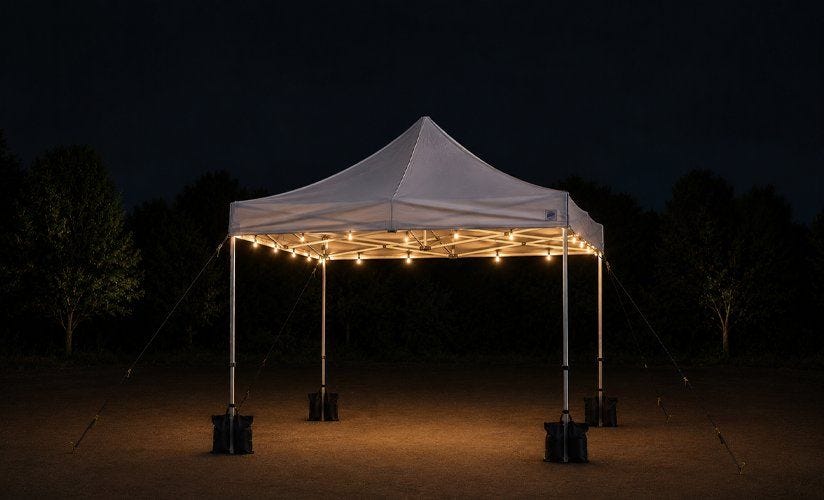
It's a question every outdoor vendor has asked at some point: can you leave a pop-up canopy up overnight? Whether you're a first-time market vendor or a seasoned craft fair regular, packing down your entire setup at the end of a long day only to reassemble it the next morning sounds exhausting. It's tempting to leave it standing.
But before you walk away from your booth for the night, there are some critical risks, rules, and realities you need to understand. An unsecured or improperly anchored canopy tent doesn’t just risk damaging your equipment; it can also become a genuine safety hazard for anyone nearby. This guide breaks down everything vendors need to know about overnight canopy use, from weather risks to event organizer requirements.
A pop-up canopy can be left up overnight in calm weather if it is properly secured. But, it is generally not recommended. Unexpected wind gusts can occur without warning and may cause the canopy to shift, collapse, or sustain the damage.
Since pop-up canopies are designed for temporary use, taking them down when there is no event, is often the safest option. If overnight use is necessary, ensure the canopy is securely anchored. And also check the weather conditions, closely monitored.
Having a better understanding of the risks, ahead of time helps you in making informed and safer decisions
1. Wind Hazards and Flying Canopies
Wind is the number one threat to an unattended canopy. Gusts that might seem manageable during the day can intensify overnight when temperatures shift. A canopy without adequate anchoring can become airborne and strike bystanders, vehicles, or neighboring booths. According to event safety experts, improperly secured canopies and tents at events have caused serious injuries including cases where frames struck people on the head, resulting in major medical emergencies and lawsuits.
That is why, pop up canopy safety starts with taking wind seriously: day or night.
2. Frame and Fabric Deterioration
Extended outdoor exposure accelerates wear on your canopy tent's frame and fabric. Overnight dew, moisture buildup, and temperature drops can stress aluminum or steel joints, causing rust on lower-grade frames, and degrade the fabric's waterproof coating over time. Whereas, the quality commercial canopy tents are built with more resilient materials, even the best setups have limits when left unattended for extended periods.
3. Vandalism
Leaving a fully assembled vendor canopy tent and that too unattended overnight have chances of opening the door to theft. Displays, equipment, and even the canopy itself can be targeted. Without supervision, your entire setup is vulnerable.
4. Liability Exposure
An unattended canopy which causes injury or property damage could leave you responsible for the consequences. That's why many event organizers have strict overnight setup rules, and some do not allow canopies to remain up when the event is closed.
Canopy Tent Anchoring: What Actually Works
Proper canopy tent anchoring is non-negotiable if you're planning to leave a canopy up for any extended period, including overnight. Let's look upon some of the effective anchoring methods.
Weight bags and canopy weights are the most vendor-friendly solution. Fillable canopy weight bags are designed to attach securely to each canopy leg without creating tripping hazards. Fill them with sand or water on-site, and aim for at least 24–40 lbs per leg. For a 10×20 tent, double the weight.
Ground stakes work well on grass or soft ground surfaces. Heavy-duty steel stakes driven at an angle into the ground, combined with guy wires attached to the canopy frame, provide solid resistance against lateral wind forces. However, stakes alone are rarely sufficient; they should be used together with weight bags for maximum stability.
Cement-filled anchors(such as PVC pipes capped with cement) are a DIY option some vendors use for long-term event setups. These are highly effective but less practical for portable use.
Anchoring Methods That Don't Work
- Jugs of water: A gallon of water weighs roughly 8 lbs. And this is nowhere near enough to secure a canopy in a gust.
- Tethering to tables, chairs, or vehicles: These don't provide adequate resistance and create tripping hazards.
- Cinder blocks: Heavy and hard-edged, cinder blocks are tripping hazards and can injure people who walk into them.
Choosing the Right Canopy for Extended Use
If you regularly set up at multi-day events or need a canopy that can safely handle overnight conditions, investing in the right equipment makes all the difference.
Recreational-grade canopies sold at big-box retailers are built for backyard use and not for repeated commercial deployment. A vendor canopy tent used professionally should be commercial grade, with a reinforced aluminum or steel frame, heat-sealed seams, and a canopy fabric rated for UV resistance and water repellency.
Built for frequent outdoor use, our Endeavor heavy duty canopy features a reinforced frame and weather-resistant canopy top, for reliable performance at multi day events.
For a full range of commercial-grade options, browse our commercial canopy tents collection to find the right fit for your setup size and event type.
Practical Safety Checklist
Before leaving the canopy up overnight, run through this checklist:
- Check the weather forecast. Avoid leaving the canopy up if wind speeds are above 15 mph.
- Confirm the event organizer permits overnight setup
- Attach a minimum of 24-40 lbs of weight to each leg using proper canopy weight bags
- Stake into the ground if on grass, using a heavy-duty stake kit
- Secure all loose items which could become projectiles
- Ensure that anchoring lines are visible, to avoid tripping hazards
- Inspect all frame connections and fabric tension before leaving
Final Word- When in Doubt, Take It Down
The convenience of leaving a pop-up canopy up overnight rarely outweighs the risks. Damaged equipment, liability exposure, and the potential to injure someone are all real consequences of an improperly secured overnight setup.
If your canopy is well-anchored, the weather is calm, and the organizer approves it you may be fine. But if any of those conditions aren't met, packing down for the night is always the safer call.
Invest in the right equipment, anchor properly every time, and your canopy tent will serve you safely through many successful events.
Frequently Asked Questions
Can you leave a pop-up canopy up overnight?
Yes, but only in calm weather with proper anchoring and event approval. If you're unsure, take it down to avoid damage, injury, or liability risks.
Why is proper anchoring required for a canopy tent?
Proper canopy tent anchoring prevents the structure from collapsing or becoming airborne in wind. Even moderate gusts can turn an unsecured canopy into a projectile. Most event organizers mandate a minimum weight of 24- 40 lbs per leg at all times, including when the event is not active.
What are the best ways to anchor a pop-up canopy tent?
For maximum stability, use properly rated weight bags on each leg. Add ground stakes wherever possible. Avoid unreliable alternatives like water jugs, cinder blocks, or furniture anchors.
Are canopy weights and stakes better for securing a canopy tent?
Weights and stakes work best together. The weights provide stability on any surface, while stakes offer extra security on soft ground, helping maximize canopy safety.
What safety precautions should vendors take while using a canopy tent at events?
Use properly rated weights, keep an eye on the weather forecast. Follow event-specific setup requirements. Choosing a durable commercial-grade canopy and the right accessories helps in reducing the risk of weather-related damage and keep your setup secure.