
Running a food stall is already a lot to manage. The last thing you need is a tent that creates more problems than it solves, whether that is a frame that wobbles mid-service or a canopy top that soaks through in the first hour of rain.
We have worked with food vendors across the country long enough to know what actually matters when choosing a shelter for a food setup. Here is what you need to think through before buying.
What Makes a Food Vendor Tent Different
Not every canopy tent is built for food service environments. A tent for a craft booth sits in the sun and holds display items. A tent for a food stall deals with heat, steam, grease in the air, and in many cases, direct scrutiny from health inspectors.
The standard concerns for canopy tents for food vendors in Canada come down to four things, mainly, flame resistance, weather protection, size, and whether the shelter meets local compliance requirements. Each one affects how smoothly your operation runs and whether you are allowed to run it at all.
Flame Resistance and NFPA 701 Certification
This is the one most food vendors do not think about until an event coordinator asks for documentation at check-in.
Many outdoor food festivals, farmers markets, and municipal events require vendors to use a flame resistant canopy tent that meets NFPA 701 standards. NFPA 701 is the fire safety test standard for fabrics and films used in temporary structures. A canopy top that passes this test has been verified to resist ignition and limit flame spread.
Our Eclipse and Vantage shelters are available with NFPA 701 certified canopy tent tops, which means you can hand over the documentation when asked and get back to setting up. If you are applying for a food vendor permit in a high-traffic public space, having this certification on record saves a real headache.
Best Complete Package for Food Vendors: ES100S 10x10
For vendors who want a complete booth setup from the start, the ES100S™ 10x10 Canopy Value Pack is one of our most practical options. It includes a commercial-grade canopy top, steel frame, three solid sidewalls, one mid-zip sidewall, a Wide-Trax™ roller bag and spikes.
The four included walls let you enclose the booth when needed, protect supplies and create a cleaner service area. The mid-zip wall can provide access or serve as the booth front, depending on the setup. The ES100S meets CPAI-84, NFPA 701 and CAN/ULC-S109 fire-resistance requirements; always confirm the exact documentation required by your event.
Waterproofing Matters More Than You Think
Food prep and rain do not mix well. Beyond the obvious product protection issue, a canopy top that lets water through creates a slip hazard and can push you into health code problems depending on your jurisdiction.
A waterproof canopy tent for vendors uses coated fabric that sheds water from the surface rather than absorbing it. Our canopy tops use materials built specifically for this, with sealed construction that holds up through full days of outdoor use. If you are working weekend markets through spring and fall, this is not optional.
Picking the Right Size for a Food Booth
Size selection for food setups is a different conversation than size selection for a retail booth.
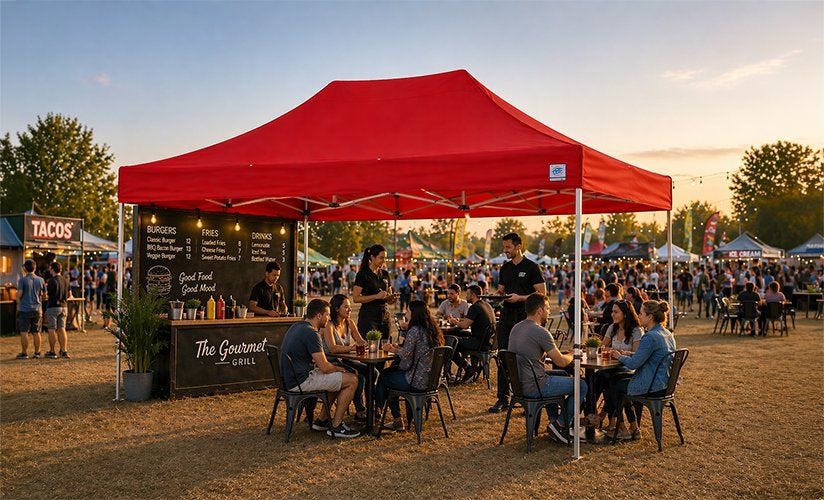
A 10x10 canopy for a food booth works well for compact operations like a single cooking station, one or two prep surfaces, and one or two people working. It fits the standard assigned booth space at most markets and festivals across the country. The footprint is manageable and setup is fast enough that one person can handle it before service starts.
The 10x20 vendor canopy tent is where most food operations that are doing serious volume end up. A front counter area, a prep zone behind it, storage, and enough room for two or three people to work without constantly crossing paths. If you are running a full grill setup or anything that involves multiple cooking surfaces, the 10x20 gives you the space to actually run service properly.
In short, if your setup involves more than one type of cooking activity or more than two people working at the same time, go with the 10x20. You will not regret the extra space.
Health Code Basics for Food Vendor Canopies
Regulations vary by province, municipality and event, so check with your local public health authority and event organizer before your first event. That said, a few things come up consistently.
Most jurisdictions require a covered prep and service area, which a canopy tent satisfies. Some require sidewalls on certain sides depending on proximity to foot traffic or cooking equipment. Our sidewall accessories attach directly to the frame and are available in solid and windowed configurations, which gives you flexibility depending on what the inspector or event coordinator requires.
Keep documentation for your tent's fire certification accessible at events. Some markets ask for it during setup and it is much easier to have it ready than to dig for it when you are trying to get service started.
Setup Tips for Food Vendor Events
Stake or weight down every leg. Food setups run heat-producing equipment and draw people close. A tent that shifts or lifts during service is a safety problem, not just an inconvenience. Our shelters include stake loops and are compatible with weight bags at each leg.
Use a full sidewall or half wall on the side facing the cooking area if you are working with open flame or a grill. It creates a cleaner separation between prep and customer interaction and satisfies the requirements at most events that handle fire safety seriously.
The Bottom Line
Getting set up as a food vendor takes enough coordination without a tent adding to the list of things that go wrong. Our shelters are built for the kind of repeated, heavy-use environment that food service creates, and we stock the certifications and accessories that make compliance straightforward rather than stressful.
If you are not sure which size or configuration fits your specific setup, our team can walk you through it. Getting the shelter right from the start means one less thing to deal with on event day.
For a complete selling setup, compare our farmers' market and vendor canopy tents, professional canopies, canopy sidewalls and canopy weights. Download the relevant documents from our canopy fire-certification page before the event.
FAQs
What canopy tent is best for food vendors?
A waterproof, flame resistant shelter with a certified NFPA 701 canopy top is the right baseline. Our Eclipse and Vantage shelters cover both and are available in sizes that work for everything from a compact single-station setup to a full multi-person operation.
Are pop up tents allowed for food vendors?
Yes at most events, provided the tent meets local fire and safety requirements. A pop up canopy for a food stall needs to be flame resistant and in many cases NFPA 701 certified. Check with the specific event or your local public health authority to confirm.
How to set up a food vendor booth legally?
Start with your local public health authority and municipal permit requirements, confirm the fire certification requirements for the events you plan to attend, and make sure your shelter has the documentation to match. Having sidewalls available and the ability to fully enclose your prep area helps with most inspection scenarios.
What is NFPA 701 certification for canopy tents?
It is a fire safety standard that tests whether fabric used in temporary structures resists ignition and limits flame spread. Many public outdoor events require vendors to use tents that meet this standard before they are allowed to set up.
Can I use a regular canopy tent for a food business?
A recreational tent is not the right call for a food business. You need waterproof fabric, a frame built for repeated setups, and in most cases fire certification. A tent that works fine in a backyard creates real problems at a permitted food event.
Best canopy tent for street food business?
Our 10x10 Eclipse is the most practical starting point for most street food setups. Compact, fast to set up, and available with a certified canopy top and matching food service accessories.
What size canopy tent is best for a food vendor booth?
A 10x10 works for a single station setup with one or two people. If you are running multiple cooking surfaces or a larger team, the 10x20 gives you the space to actually run service without everything feeling cramped.
Does my food vendor canopy tent need to be NFPA 701 certified?
It depends on the event and your local regulations. Many outdoor food festivals and public markets require it. We recommend having a certified canopy top regardless, because it comes up more often than most vendors expect and it is easier to have it than to scramble for a replacement on event day.